


Realtor Home Staging Packages That Sell Better
A vacant living room can look smaller than it is. An overfurnished family home can hide its best features. And a listing with beautiful bones can still lose buyer attention when photographs feel dark, dated, or disconnected. Realtor home staging packages solve that presentation gap by giving each property a clear, buyer-focused visual story before it reaches the market.
For GTA agents, staging is not simply a finishing touch. It is part of the listing strategy. The right package helps buyers understand scale, imagine their lifestyle in the home, and connect the online listing experience to what they see at the showing. The result is a more polished first impression that can support stronger interest, more confident offers, and a premium market position.
What realtor home staging packages should accomplish
A staging package should do more than fill empty rooms with furniture. It should identify the spaces that influence a buyer's decision and present them in a way that suits the property, neighbourhood, likely buyer, and listing price.
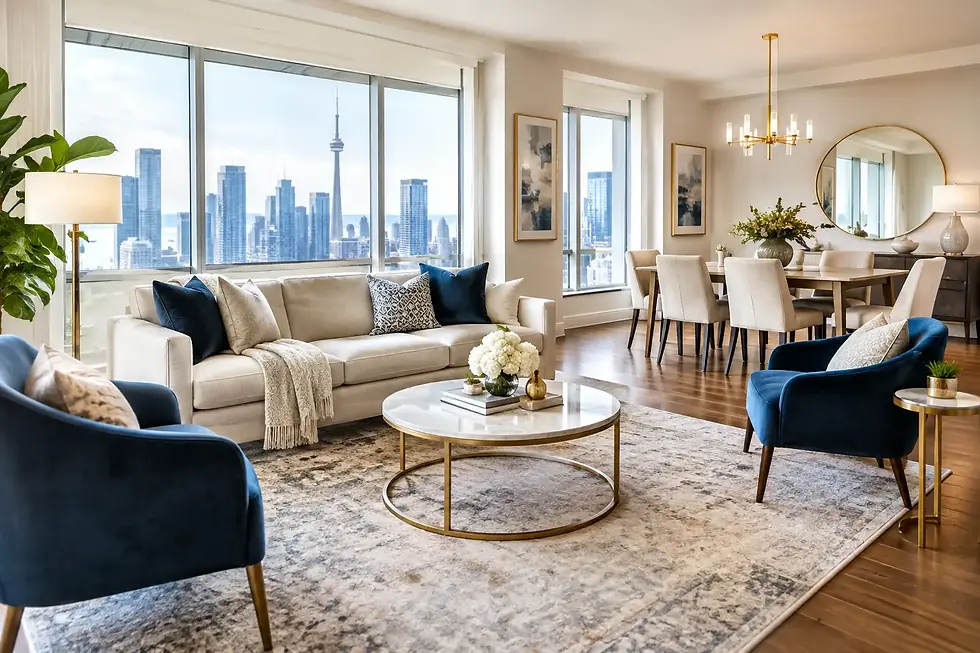
For a downtown Toronto condominium, that may mean making a compact layout feel intentional, functional, and elevated. In a Mississauga family home, the priority may be clarifying the main floor flow, establishing a warm primary bedroom, and showing how a lower level can serve a growing household. A builder's model home may require a more complete design direction that translates plans and finishes into a memorable lifestyle.
The common goal is perceived value. Buyers do not purchase square footage alone. They respond to light, flow, comfort, aspiration, and the feeling that a home has been cared for. Professional staging brings those signals into focus without asking the seller to undertake a full renovation.
The package level should follow the listing strategy
There is no single right staging scope for every listing. A well-designed service gives agents room to match investment to opportunity rather than applying the same formula to every property.
Consultation and occupied-home styling
An occupied-home package begins with expert direction. A stager assesses what is already working, what is distracting, and which rooms need the greatest attention. Sellers receive practical guidance on editing, furniture placement, cleaning, repairs, colour, and how to prepare for photography and showings.
This route can be a smart choice when the homeowner has quality furnishings and the property is fundamentally well presented. It is also useful when timing is tight or the seller needs a budget-conscious plan. The trade-off is that the final look is partly dependent on the existing furniture, décor, and the seller's ability to maintain the presentation throughout the listing period.
Partial staging for high-impact rooms
Partial staging combines the homeowner's existing pieces with rented furniture and accessories for selected rooms. The living room, dining room, primary bedroom, entry, and outdoor area are often the best places to invest because they carry significant weight in listing photos and buyer memory.
This approach can provide a meaningful visual upgrade without furnishing every room. It works particularly well for sellers whose furniture is usable but inconsistent, or for larger homes where a few empty spaces are weakening the overall impression. The risk is under-staging the wrong areas. A strong primary suite and living room will not fully compensate for a vacant dining room that leaves buyers unsure how the space functions.
Full vacant-home staging
Vacant properties usually benefit from the most comprehensive package. Empty rooms rarely communicate their potential as clearly as sellers expect. Buyers can misjudge room proportions, overlook storage or layout advantages, and struggle to picture where daily life would happen.
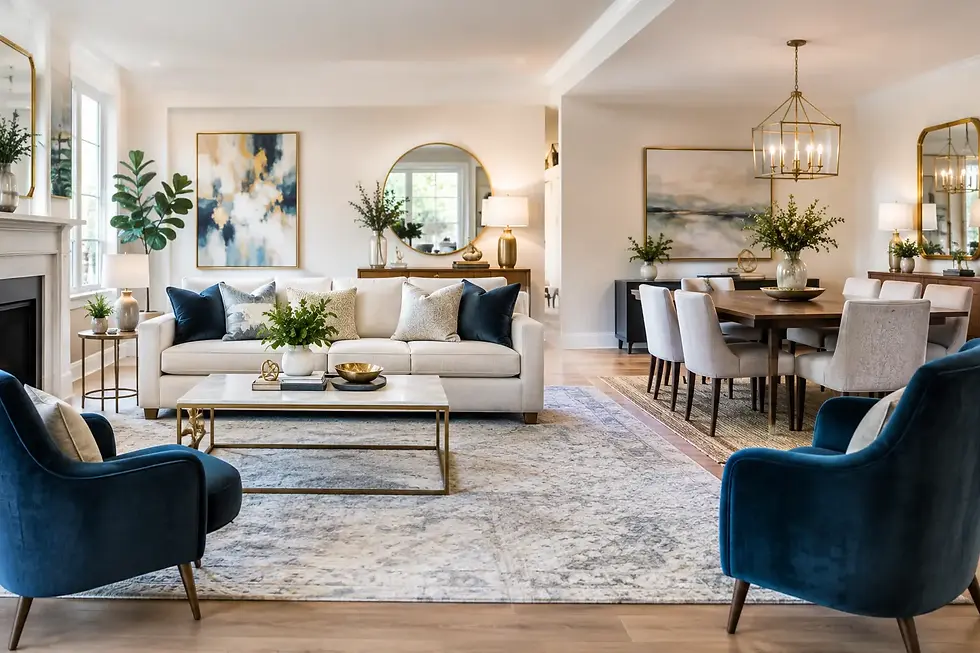
A full package typically creates a cohesive look across the main living spaces, bedrooms, dining area, entry, and key secondary rooms. Furniture, rugs, art, lighting, accessories, and soft furnishings work together to create scale and warmth. The objective is not to make the home look decorated for its own sake. It is to make every featured space feel purposeful and photogenic.
For premium properties, full staging may also include distinctive furnishings, curated artwork, outdoor styling, and custom selections that better reflect the expected buyer. Generic furniture can make a high-value listing feel interchangeable. A more tailored presentation protects the property's positioning.
Builder and model-home presentation
Builders need a package that begins earlier in the sales process. Instead of responding to an existing home, the staging and decorating plan may be built around floor plans, finishes, target demographics, and the development's brand. This can include furniture rental, interior decorating, and retail furniture solutions for a lasting model-home environment.
The value lies in helping buyers read a blueprint emotionally. A well-furnished model suite or home shows how rooms live, not just how they measure. For projects with multiple units or phases, operational capacity matters as much as design talent. The staging partner must be able to coordinate inventory, delivery, installation, and refreshes without slowing the sales schedule.
What to look for in a staging quote
Comparing staging quotes by price alone can create surprises later. Two packages may carry similar starting numbers while offering very different room coverage, inventory quality, rental periods, and service levels.
Ask what rooms are included and whether the quote covers the pieces needed to complete them. Clarify the rental term, delivery, installation, removal, and any extension fees if the listing remains active. It is also worth confirming who handles recommendations for paint, minor improvements, and seller-owned furniture, since these details often shape the final result.
For luxury and move-up listings, ask to see whether the inventory can suit the home rather than simply fit inside it. Scale, material, colour, and condition all affect perceived value. A refined staging plan should feel considered from the entry through the primary suite, with enough variation to avoid a showroom formula.
Realtors managing several active listings should also consider reliability. A staging company with broad inventory and warehouse capacity can support faster turnarounds and consistent service when multiple properties need attention at once. That matters when photography, launch dates, and client expectations are all moving quickly.
How to recommend staging with confidence
Sellers are more receptive when staging is framed as a marketing investment, not a critique of their home or taste. Start with the buyer's experience: online shoppers make fast judgments, and showings are more effective when rooms are easy to understand.
Be specific about the property's opportunity. Perhaps the home has excellent natural light that is hidden by heavy window coverings. Perhaps the layout is larger than it appears in photographs. Perhaps the kitchen renovation deserves a dining area that matches its level of finish. Connecting the recommendation to a visible business case makes the discussion more productive.
It also helps to present options. An occupied-home consultation, a partial package, and a full vacant-home package allow sellers to see what changes at each investment level. They can then choose an approach that suits their budget and selling timeline without feeling pushed into an all-or-nothing decision.
The details that make staging feel premium
Premium presentation is created through restraint as much as addition. Rooms need a focal point, useful scale, and a sense of ease. They do not need every surface filled or every trend represented.
The strongest staging plans balance broad buyer appeal with enough personality to be memorable. A neutral palette may anchor the home, while layered textiles, art, greenery, and carefully chosen accent colours add depth. In photography, those details create visual rhythm. In person, they help a buyer pause, look around, and picture the home as a place they want to return to.
StagingPro approaches this work through an integrated decorator-and-stager perspective, pairing strategic market presentation with furniture and styling choices that feel cohesive at the appropriate package level. That distinction is especially valuable when a listing needs more than basic furnishing to meet the expectations of its price point.
Timing staging around the launch
Bring the staging conversation into the listing plan early, ideally before photography is booked. This creates time for the seller to complete recommended touch-ups, arrange cleaning, remove excess belongings, and make decisions without last-minute pressure.
For vacant homes, early planning also gives the staging team a clearer installation window and helps protect the launch date. For occupied properties, it gives sellers time to adjust to the new layout and understand how to keep it show-ready. A beautiful installation loses impact if laundry, personal items, or extra furniture return before the first open house.
The best realtor home staging packages are not defined by how much furniture arrives at the door. They are defined by how clearly the home is positioned for its next buyer. Choose a scope that makes the property easier to photograph, easier to understand, and more difficult to forget.

Comments