


How to Stage Luxury Homes for a Premium Sale
A luxury buyer can spot a missed opportunity before they reach the kitchen. An empty great room that feels smaller than expected, a dated dining set beneath a statement chandelier, or accessories that look generic can quietly weaken the perceived value of an otherwise exceptional listing. Knowing how to stage luxury homes means presenting every room as evidence of a lifestyle worth paying for.
Luxury staging is not about filling a property with expensive-looking furniture. It is a property marketing strategy that gives buyers a clear emotional and practical reason to move forward. The right presentation brings scale to large rooms, warmth to contemporary architecture, and purpose to spaces that might otherwise feel unclear in photos or during a showing.
Start With the Buyer, Not the Furniture
A polished home should feel tailored to its likely purchaser. Before selecting furniture, assess the property, neighbourhood, price point, architecture, and the buyer lifestyle the listing is designed to attract. A sleek downtown condominium, a waterfront home in Oakville, and a newly built family property in the GTA may all be premium listings, but they need very different visual stories.
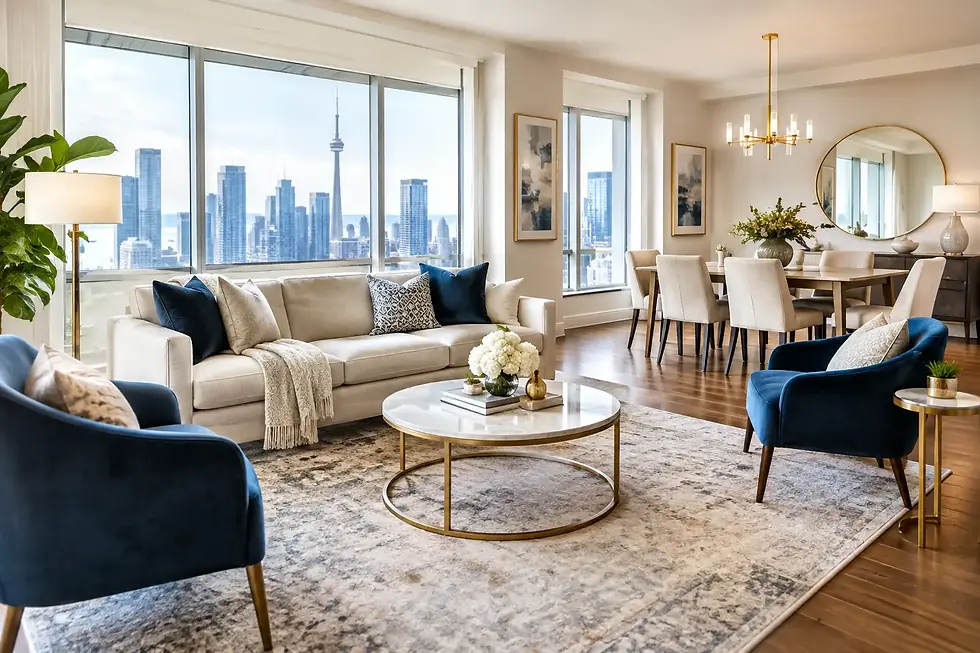
For a contemporary condo, the goal may be refined city living: clean-lined upholstery, sculptural lighting, a restrained palette, and a work-from-home space that feels considered rather than improvised. In a large detached home, buyers may need to see how generous rooms can support entertaining, family life, and private retreat. A builder's model home needs enough personality to create connection while remaining broad enough for prospective purchasers to imagine their own future there.
This early strategy prevents a common staging mistake: selecting individual pieces that look attractive but do not communicate a cohesive lifestyle. Luxury buyers are not simply evaluating square footage. They are deciding whether the home reflects their aspirations, routines, and expectations at that price point.
Let the Architecture Set the Direction
The home itself should lead the design. Notice the ceiling heights, window placement, sightlines, millwork, flooring, and fixed finishes before choosing a style. A heritage property with original detailing may call for layered, timeless furnishings that respect its character. A newly renovated home with dramatic glazing may benefit from contemporary pieces that preserve an open, gallery-like feeling.
Staging should support architectural features, not compete with them. If the home has a marble fireplace, custom-built cabinetry, or a view that commands attention, arrange the room so those assets are immediately visible. Avoid placing a large sofa in front of a key focal point simply because it fits the floor plan.
How to Stage Luxury Homes Room by Room
Every room should answer a buyer's unspoken question: what does life look like here? That does not mean every corner needs a staged moment. It means the important spaces need purpose, proportion, and visual confidence.
Create Scale in the Main Living Areas
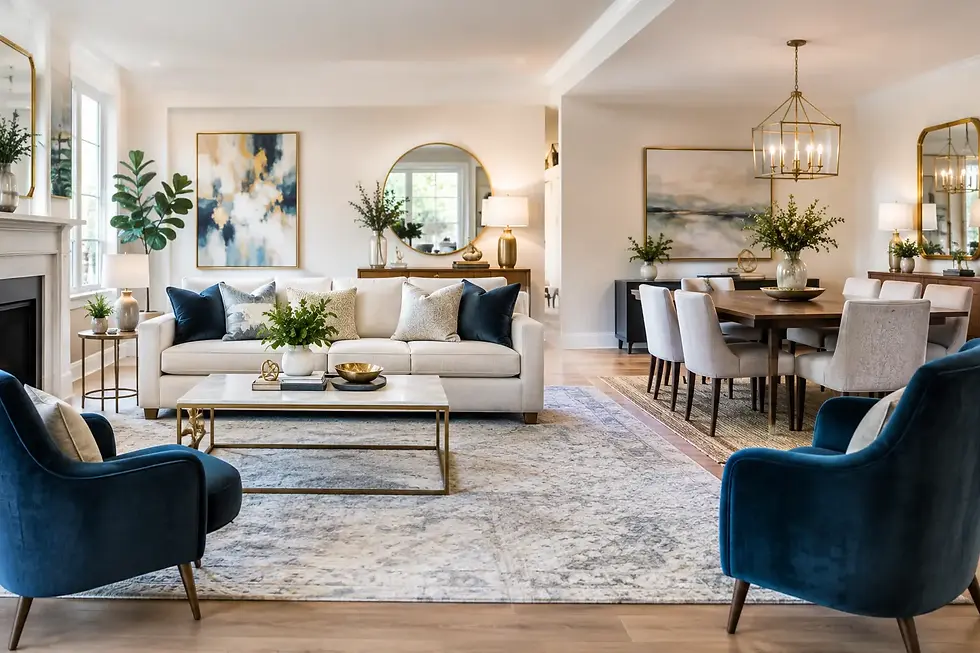
Luxury homes often have generous rooms, open-concept layouts, or ceilings that make standard furniture appear undersized. Small-scale pieces can make a large room feel vacant rather than grand. Choose substantial seating, area rugs with enough reach to ground the conversation area, and appropriately sized art and lighting.
In a living room, establish a comfortable conversation zone rather than pushing all furnishings against the walls. A well-composed arrangement can make a large space feel welcoming while showing buyers where they will gather. In an open-concept plan, use rugs, furniture orientation, and lighting to distinguish the living, dining, and kitchen areas without interrupting flow.
The dining room deserves particular attention because it sells the idea of hosting. A properly scaled table, elegant chairs, statement lighting, and a simple tablescape can turn an underused room into a reason to picture holidays, celebrations, and dinner with friends. Keep the styling restrained. Buyers should notice the room and its possibilities before they notice the decor.
Make the Primary Suite Feel Like a Retreat
The primary bedroom should communicate privacy, comfort, and calm. A substantial bed, layered bedding, balanced nightstands, and thoughtfully placed lighting create the sense of a finished retreat. Where space allows, a lounge chair, bench, or small seating area can reinforce the suite-like experience.
Avoid overdecorating. The objective is not to make the room feel like a hotel display. It should feel elevated but believable, with enough warmth to suggest daily comfort. In luxury listings, buyers also pay close attention to closets and ensuites. Edit these spaces carefully so storage and finishes feel generous, clean, and ready to use.
Give Secondary Spaces a Clear Job
An undefined den, spare bedroom, or loft can leave buyers wondering whether the home truly meets their needs. Staging is especially valuable here because it can translate square footage into function. Depending on the property and buyer profile, that room may become a sophisticated office, an inviting guest room, a reading lounge, or a flexible study area.
The choice depends on the market. A family-focused property may benefit from a homework zone or play space, while an executive condo may be better served by a polished office. Do not try to show every possible use in one room. A clear purpose is more persuasive than a crowded compromise.
Choose Quality That Holds Up in Person and Online
Premium listings are judged twice: first through photography and video, then in person. Furniture, artwork, textiles, and accessories need to read as elevated in both settings. That requires more than a neutral colour palette. It requires quality, texture, contrast, and intentional composition.
Use a refined base of upholstery and case goods, then layer in materials such as natural wood, stone, metal, linen, boucle, velvet, or wool. Texture is what keeps neutral luxury interiors from feeling flat in listing photos. A room with cream seating, pale walls, and light flooring can be striking, but it needs tonal variation and a few darker or more sculptural elements to create depth.
Custom furniture selection can make a meaningful difference when the home has unusual dimensions, a distinctive style, or high-value finishes that deserve a better match than generic rental inventory. At the same time, custom does not always mean necessary. For a shorter listing timeline or a budget-conscious project, a strong collection of upscale rental pieces may deliver the right level of impact. The best approach balances visual return with the property's likely sale price and market conditions.
Edit With Discipline Before Styling
Luxury is often communicated through what is absent. Remove tired furniture, overly personal collections, excess cords, crowded surfaces, and anything that distracts from the home's finishes. Buyers need visual room to appreciate the details they are paying for.
Then style selectively. A large coffee table may need a few books, a tray, and one sculptural object. Kitchen counters may need a simple arrangement rather than a collection of appliances and accessories. Artwork should be scaled properly and hung with intention. Every item should either reinforce the design story or be removed.
This discipline matters during showings as much as it does in photography. When buyers are not distracted by clutter or awkward layouts, they can focus on the qualities that support a premium offer: natural light, craftsmanship, flow, storage, views, and livability.
Treat Curb Appeal as the First Room
The presentation begins before the front door opens. Tidy landscaping, a clean entry, updated planters, appropriate outdoor seating, and a welcoming front door can signal that the home has been cared for at every level. For listings with terraces, balconies, pools, or landscaped yards, outdoor staging should show how those spaces extend the home's living area.
A compact balcony may only need two refined chairs and a small table. A larger backyard can support distinct zones for dining, lounging, and entertaining. The key is to show possibility without making the space look busy. Buyers should be able to imagine an easy summer evening there within seconds.
Work With a Staging Partner That Can Deliver the Vision
High-end presentation is easiest when strategy, inventory, logistics, and design expertise are coordinated from the outset. Realtors managing multiple listings need dependable scheduling and enough inventory to avoid a repeated, formulaic look. Homeowners need practical guidance on where to invest, what to remove, and which improvements will have the greatest visual effect. Builders need interiors that bring plans and finishes to life before buyers ever move in.
StagingPro approaches these projects through an integrated decorator-and-stager model, pairing luxury-focused furnishings with a practical recommendation process. The aim is not to impose a signature look on every home. It is to create a market-ready environment that makes the property's strongest features easier to see, remember, and value.
A well-staged luxury home does more than photograph beautifully. It gives the right buyer a reason to linger, imagine, and feel that this is the property they have been waiting for.

Comments