


Premium Listing Staging Guide for GTA Sellers
A premium home is rarely sold on square footage alone. Buyers may first notice the location, finishes, or architecture, but their decision is often shaped by how the property makes them feel the moment they enter. This premium listing staging guide explains how to turn that first impression into stronger buyer interest, more compelling marketing, and a presentation that supports premium pricing.
For sellers and realtors across the GTA, staging is not about filling empty rooms or concealing flaws. It is a property marketing decision. Every room should help buyers understand the lifestyle the home offers, the scale they are purchasing, and why this listing deserves their attention over comparable properties.
Start With the Buyer, Not the Furniture
The most effective staging begins before a single piece of furniture arrives. Ask who is likely to buy the property and what they need to see to feel confident making a strong offer. A Yorkville condominium, a family home in Oakville, and a new-build model in Brampton may all require polished interiors, but they should not tell the same story.
A downtown condo may need a refined entertaining area, a purposeful work-from-home zone, and furnishings that make compact rooms feel open. A larger family home may need a welcoming dining room, a comfortable family room, and bedrooms that demonstrate flexibility for children, guests, or a home office. For a builder, the goal is often to translate an unfinished plan into a lifestyle buyers can immediately picture.
This is where generic staging can fall short. A room can look tidy and still fail to communicate value. Premium staging uses furniture scale, layout, art, lighting, and accessories to give each space a clear role. Buyers should not have to guess whether an awkward alcove is useful or whether a large principal room can accommodate real entertaining.
Premium Listing Staging Guide: Build a Cohesive Story
A premium listing needs a visual point of view. That does not mean every property should be ultra-modern or filled with dramatic colour. It means the interior should feel intentional from the front entrance through to the primary suite and outdoor space.
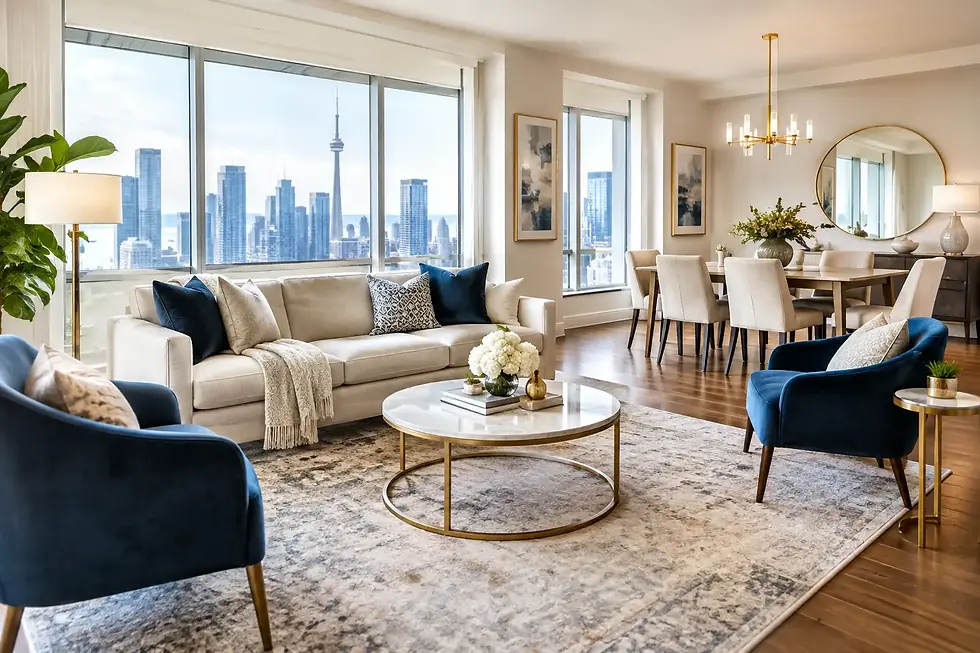
Begin with the home’s strongest features. Perhaps it is a double-height foyer, restored millwork, wide-plank flooring, a view, or a well-designed kitchen. Staging should frame these assets rather than compete with them. A grand foyer needs breathing room and a statement that feels proportionate. A view needs furniture arranged to draw the eye outward. A kitchen island should suggest the kind of casual hosting or family gathering buyers want to imagine.
Consistency matters. If the main floor feels warm, tailored, and elevated, a random bedroom with undersized furniture or sparse decor can weaken the overall experience. Buyers may not articulate the problem, but they notice when the presentation loses confidence. Cohesive furniture selections, repeated accent tones, considered artwork, and layered textiles help the listing feel complete in person and in photography.
There is a balance to maintain. Too little furniture can make a premium property feel cold, unfinished, or smaller than it is. Too much furniture can obscure circulation and make buyers focus on the contents instead of the architecture. The right approach depends on the property, its target market, and the quality of the existing finishes.
Prioritize the Rooms That Influence Offers
Not every room requires the same investment. Buyers form their strongest opinions in the spaces that shape daily life and listing photographs: the entrance, living room, kitchen, dining area, primary bedroom, and main outdoor area when applicable.
The entrance sets the expectation. It should feel open, clean, and appropriately styled for the home’s price point. Even a modest foyer benefits from a purposeful console, mirror or art, and lighting that gives the arrival a finished feel.
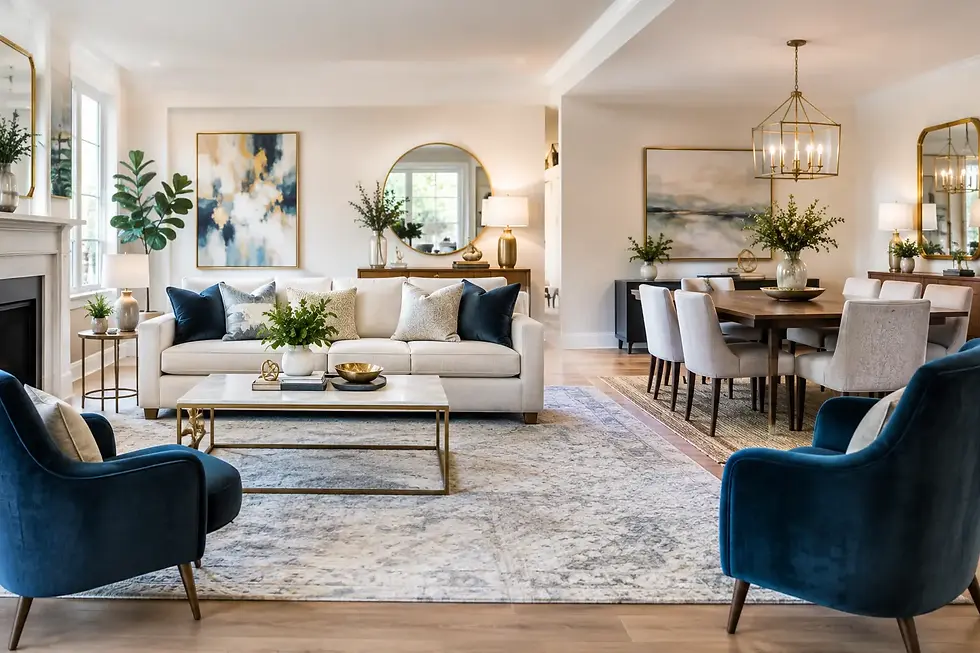
In the living room, establish conversation and scale. Floating furniture away from walls can make a large room feel more welcoming, while a properly sized area rug grounds the arrangement and helps define the room. Small rugs, tiny coffee tables, and lightweight seating often make otherwise beautiful spaces appear less valuable.
The dining room is a frequent missed opportunity. It should demonstrate capacity without looking like a showroom. A well-proportioned table, comfortable seating, and a restrained table setting suggest entertaining potential. In premium properties, buyers are often purchasing the promise of hosting as much as the house itself.
The primary bedroom should be calm and spacious. A substantial bed, layered bedding, balanced nightstands, and a simple seating moment can turn an ordinary room into a private retreat. Avoid overly personal decor, but do not strip the room of warmth. The goal is aspiration with enough neutrality for buyers to see themselves there.
Edit Before You Add
Staging cannot work around visual noise. Before the design plan is implemented, remove personal photographs, excess furniture, collections, oversized toys, refrigerator magnets, and anything that distracts from the property. This is not a criticism of how someone lives. It is a shift from a lived-in home to a market-ready product.
Editing is especially important in luxury and move-up listings because buyers expect a higher level of care. Closets, pantries, bathrooms, laundry rooms, and storage areas should support the same impression of order as the main living spaces. They do not need to look empty, but they should look generous, clean, and easy to use.
Address maintenance before staging as well. Scuffed baseboards, burnt-out bulbs, loose hardware, dated caulking, and worn entry mats can undermine an otherwise exceptional presentation. Buyers often interpret small unfinished details as signs of larger deferred maintenance. A staging plan is most persuasive when the home is clean, repaired, and ready for close inspection.
Design for the Camera and the Showing
A listing is first experienced online, often in seconds. Staging must therefore work in photographs, video, social media clips, and virtual tours. It also has to feel right when buyers walk through the door. Those objectives overlap, but they are not identical.
For photography, clean sightlines and layered focal points matter. The camera responds well to symmetry, depth, contrast, and rooms with an obvious purpose. For showings, buyers need clear pathways, practical scale, and enough visual comfort to linger. A dramatic chair placed solely for a photo may not be useful if it blocks the route to a terrace or makes a room feel cramped.
Light is another major value signal. Open window coverings where privacy allows, clean the glass, replace mismatched bulbs, and use warm, consistent lighting throughout the home. Dark corners and harsh, cool-toned bulbs can make premium finishes look less inviting. If a property has limited natural light, thoughtful lamps and reflective surfaces can add dimension without making the space feel over-styled.
Choose Investment by Expected Return
The right staging budget is not always the largest one. It should reflect the listing price, local competition, condition of the home, and the gap between its current presentation and the image required to compete. A vacant luxury listing usually needs a more complete furnishing plan than an occupied home with strong existing pieces. A homeowner may only need strategic furniture rental, art, linens, and accessories to elevate what is already there.
Realtors managing multiple listings also need dependable timing and inventory. A staging partner with decorator expertise and broad product capacity can create a more tailored result while reducing the stress of coordinating several vendors. StagingPro, for example, combines custom furniture selection with staged inventory to support varied property styles and budgets.
The trade-off is straightforward: cutting the presentation budget may save money upfront, but an under-furnished or visually inconsistent listing can make it harder to justify a premium position. At the same time, spending without a strategy is not the answer. The best plan puts investment where buyers will see it, feel it, and remember it.
Prepare for the Final Walk-Through
Once the staging is in place, review the property as a buyer would. Stand at the front door. Look for the first focal point, then walk each route slowly. Are there obstructions? Does every room have a purpose? Are the bathrooms fresh, the counters clear, and the beds properly made? Does the home feel equally considered on the second floor and in the lower level?
Ask your photographer to capture the rooms when lighting is most flattering, and keep the property in show-ready condition after launch. Premium presentation is not a one-day event. Fresh towels, clean surfaces, switched-on lamps, and orderly exterior spaces maintain the momentum created by the listing photos.
A well-staged home does more than look expensive. It makes the buyer’s next chapter feel close, credible, and worth pursuing. When every room supports that feeling, the property has a stronger chance to earn the attention and offers its value deserves.

Comments