


How to Stage Occupied Homes for a Premium Sale
A lived-in home can sell beautifully, but it cannot look like it is waiting for the family to come back from school. Learning how to stage occupied homes is about creating a refined buyer experience while respecting the reality that people are still cooking, sleeping, working, and raising families in the space. The goal is not to erase the homeowner's life. It is to edit the home so buyers can immediately see its value, scale, and potential.
For GTA sellers and realtors, this balance matters. Occupied properties often feel warmer and more credible than vacant homes, yet everyday belongings can quickly distract from premium finishes, natural light, or a generous floor plan. A strategic staging plan makes the home feel considered, spacious, and ready to move into without making daily life impossible.
Start With a Realistic Occupied-Home Plan
Occupied staging works best when it begins with an honest conversation. Before choosing cushions, artwork, or rental furniture, identify who lives in the property, how quickly it needs to be listed, and what parts of the home are used most heavily. A family with young children needs a different plan than a professional couple working remotely or an owner who has already moved most belongings out.
The most successful approach separates the home into three categories: rooms that must photograph and show at their best, rooms that need functional but lighter styling, and private storage zones that buyers will not access. This gives homeowners a practical place to put daily essentials and prevents the common cycle of tidying every item before every showing.
A professional stager can also help decide what stays. Some existing furniture may support the sale, particularly a well-proportioned dining table, a quality upholstered bed, or a distinctive occasional chair. Other pieces may be too large, too worn, or too personal for the listing. Replacing only the high-impact items can be more effective and more budget-conscious than trying to redesign every room.
How to Stage Occupied Homes Without Disrupting Life
The key is to remove visual noise first. Buyers do not need a completely empty kitchen counter, but they should be able to picture preparing a meal there. Keep one or two intentional accessories, such as a sculptural bowl or a simple tray, and store the toaster, mail, charging cables, dish racks, and extra appliances.
The same principle applies throughout the home. Open surfaces create a sense of square footage and calm. When every ledge, shelf, and side table is full, even a large room can feel undersized.
Edit personal items with care
Personal photographs, medals, religious items, collections, and highly specific decor can make a house feel like someone else's home. Pack these pieces early, along with excess books, souvenirs, and seasonal decorations. This is not about removing personality altogether. It is about allowing the home's architecture and finish level to become the focus.
Keep a few polished, neutral touches that add warmth: art with broad appeal, fresh greenery, textured throws, and restrained decorative objects. In premium listings, fewer accessories with better scale usually read more luxurious than many small accessories scattered around the room.
Create a showing routine that can actually last
A staging plan fails if it requires an hour of effort every time the phone rings. Set up a simple pre-showing routine that every household member can follow. Have designated baskets or closed bins for toys, work supplies, pet items, and bathroom products. Store them in a closet, the trunk of a car, or another approved area before showings.
Beds should be made, laundry should be put away, and waste bins should be emptied. Pet bowls, litter boxes, and visible pet beds should be removed when possible. These details may feel minor to an owner, but buyers notice them because they affect the sensory experience of the property.
If the home will be listed for several weeks, choose durable staging elements. White bedding can be striking in photographs, but it may not be practical for every household. A layered bed in soft taupe, charcoal, or muted blue can still feel elevated while standing up better to daily use.
Prioritize the Rooms That Shape Buyer Decisions
Not every room carries equal weight. The entry, living room, kitchen, primary bedroom, and main bathrooms deserve the strongest visual attention because they influence the first impression and the emotional case for the purchase.
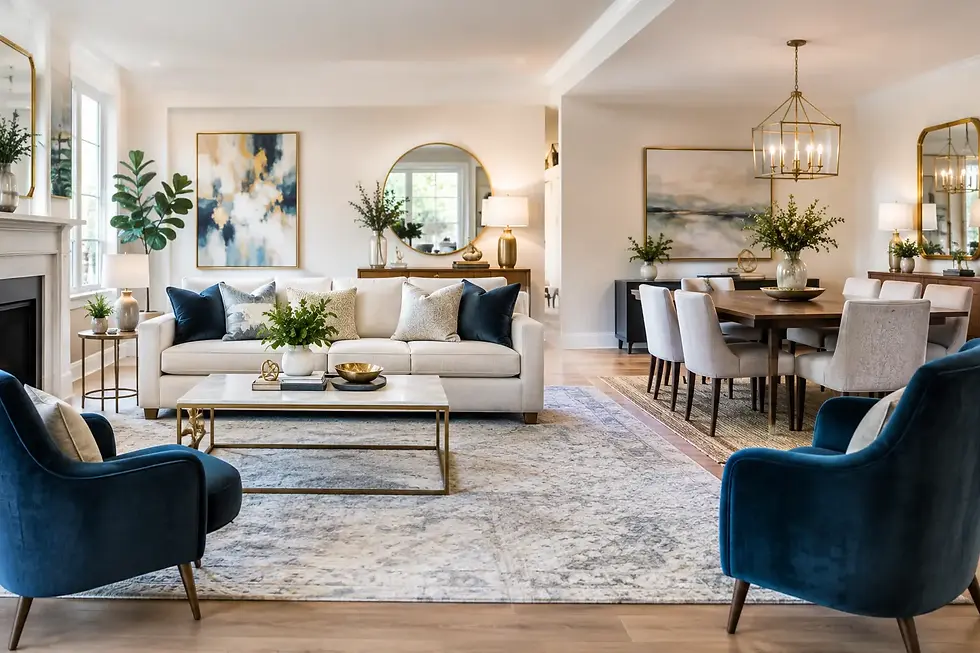
In an entry, clear the floor and limit outerwear. A clean console, mirror, and restrained styling signal order from the first step inside. In the living room, establish a clear conversation area with furniture that fits the room. Oversized sectionals and too many recliners often block sightlines and make the space appear smaller. If the existing pieces are not working, furniture rental can introduce the right scale without requiring the seller to buy new furniture before moving.
The primary bedroom should feel like a retreat, not a storage room. Remove exercise equipment, paperwork, extra dressers, and bulky personal furnishings. A properly sized bed, coordinated bedding, bedside lighting, and simple art can transform the room's perceived value quickly.
Bathrooms require an especially disciplined edit. Leave out fresh towels, a minimal soap dispenser, and perhaps a small plant. Hide medication, toothbrushes, bath toys, cleaning products, and excess toiletries. Buyers associate clean, hotel-like bathrooms with care and quality.
Use Furniture to Correct Layout Problems
Occupied homes often reveal an issue that homeowners have learned to live with: a room used for storage, a dining area that has become an office, or a basement with no clear purpose. Staging gives each space a marketable job.
A small desk and tailored chair can define a work-from-home nook. A properly placed dining table can make an awkward open-concept area feel intentional. In a finished basement, a lounge arrangement, games table, or guest bedroom setup can help buyers understand the usable square footage.
This is where a decorator-and-stager perspective adds value. The right furniture does more than fill a room. It directs the eye, improves traffic flow, and makes a layout feel more generous. In a luxury-focused presentation, pieces should also support the level of the property. Generic, undersized furniture can weaken the impression created by high ceilings, upgraded flooring, or custom millwork.
Prepare for Photography Before Preparing for Showings
Listing photos are often the buyer's first tour. A property that presents well in person but looks cluttered online may lose showings before it has a chance to make an impression. Schedule photography after the major edit and staging installation, not during the transition.
On photo day, remove small distractions that the camera exaggerates: floor mats, tissue boxes, visible cords, refrigerator magnets, remote controls, and extra chairs. Open blinds where privacy allows, turn on interior lights, and check that bulbs match in colour temperature. Cool white light beside warm yellow light can make a room look unfinished.
Photography also reveals what the eye has missed. Review each room through a camera lens before the photographer arrives. If a chair interrupts a walkway or a shelf looks crowded in a photo, it will likely read that way to buyers as well.
Know When Partial Staging Is the Smart Investment
Full occupied-home staging is not always necessary. It depends on the condition of the existing furnishings, the price point, the competition, and the home's strongest selling features. In some cases, an occupied consultation and targeted accessory package are enough. In others, key rental pieces in the living room, dining room, and primary bedroom will create a much stronger return.
The risk of doing too little is that buyers focus on the owner's belongings rather than the property. The risk of doing too much is creating a polished look that cannot be maintained during a busy listing period. The right strategy sits between those extremes: elevated enough to photograph and show at a premium level, practical enough for daily living.
For sellers who need a clear plan, StagingPro can coordinate the edit, furnishings, and finishing details around the property's market position and the household's timeline. A home does not have to be vacant to feel aspirational. With thoughtful choices, it can feel lived in, beautifully cared for, and ready for its next owner.


Comments